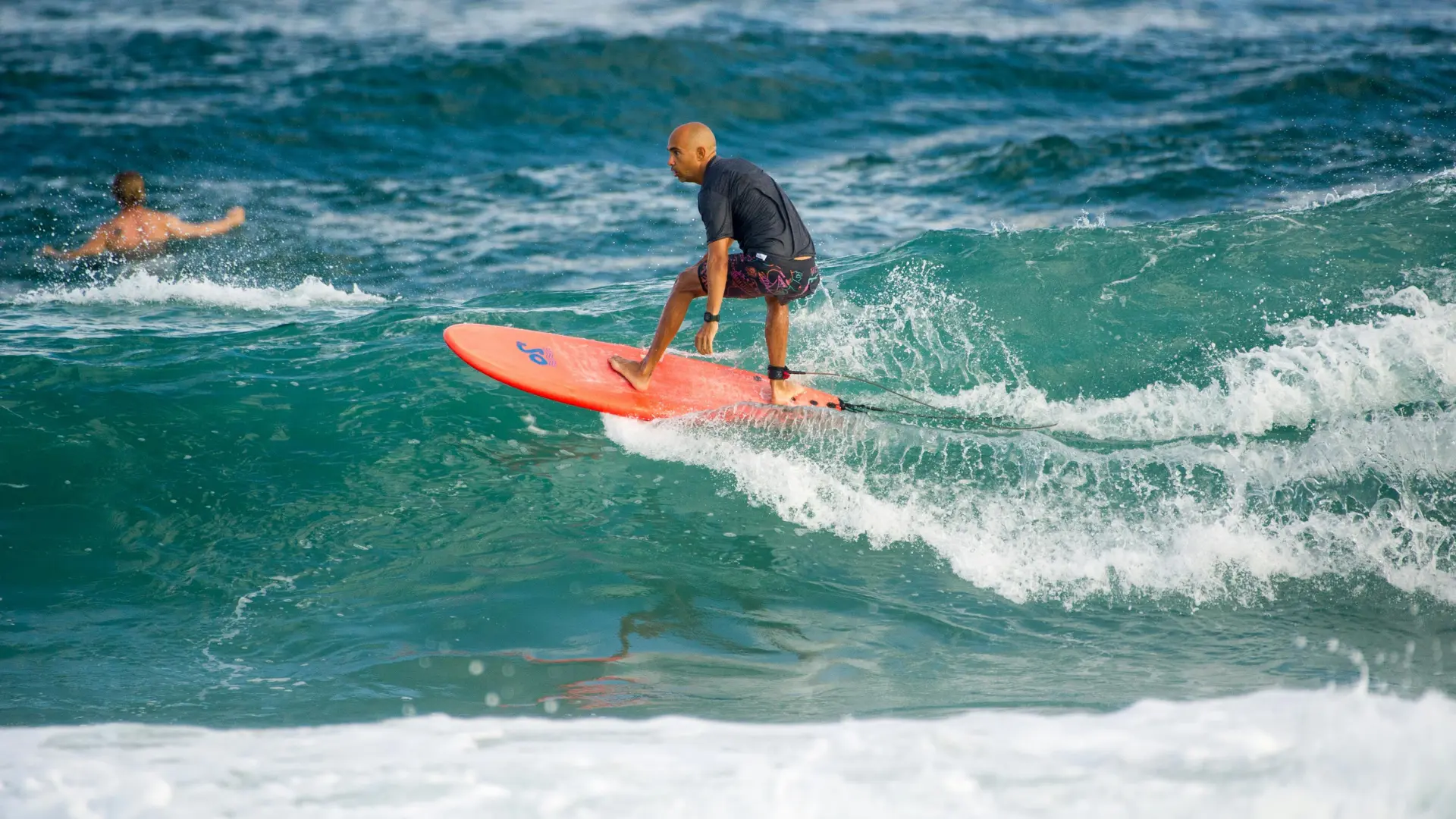

Surfing is one of those things you’ve probably imagined more times than you can count. You’ve seen someone glide across a wave, relaxed and confident, and thought, I want that feeling. But when you actually consider trying it, doubts creep in. Will you fall? Will you look foolish? Is the ocean too powerful?
If you’re here, it means you’re ready to move past the hesitation. Learning how to surf for beginners isn’t about being fearless or athletic. It’s about understanding the ocean, choosing the right equipment, and practicing a few core skills the right way. Every experienced surfer you admire once struggled to stand up on whitewater, just like you’re about to.
This guide is designed to walk you through the process step by step—no fluff, no intimidation, just practical advice you can use from your very first session.
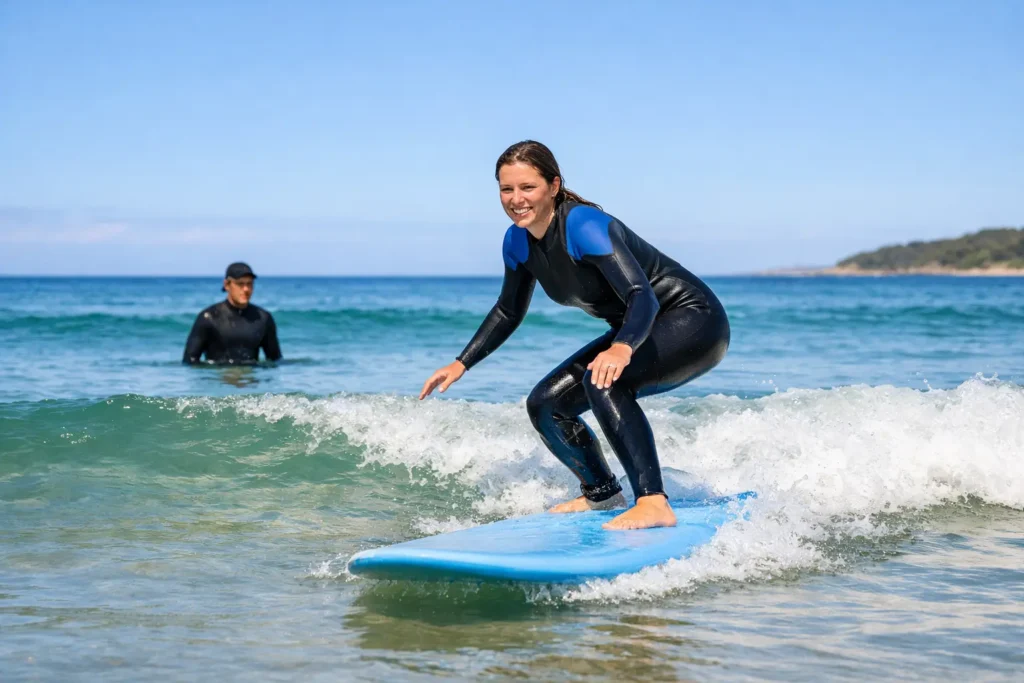
Table of Contents
How to Surf for Beginners – What You Need to Know Before You Start
Before you even touch a surfboard, there are a few truths you should understand. These will save you frustration and help you progress faster.
Is Surfing Hard for Beginners?
Surfing is not easy—but it is learnable.
The challenge comes from doing several things at once:
- Balancing on a moving surface
- Timing your movements with a wave
- Managing fatigue while paddling
The good news? Beginners don’t need to master everything at once. Your early goal is simple: catch small waves and stand up safely. Once you accept that falling is part of learning, surfing becomes far more enjoyable.
Do You Need to Be Super Fit to Start Surfing?
You don’t need a gym-built body, but a few basics matter:
- You should be comfortable swimming
- You should have decent shoulder mobility
- You should be able to paddle for short bursts
Surfing builds fitness over time. You don’t need to arrive in peak shape—you’ll get there naturally.
Essential Surfing Skills Every Beginner Must Learn
This is the foundation of how to surf for beginners. Master these skills, and everything else becomes easier.
Paddling Basics: The Engine of Surfing
Paddling is how you move, position yourself, and catch waves. Poor paddling is the #1 reason beginners struggle.
Correct paddling position:
- Lie centered on the board
- Chest slightly raised
- Eyes looking forward, not down
Paddling technique tips:
- Use long, relaxed strokes
- Keep your fingers together
- Paddle from the shoulder, not just the arms
If your nose dives underwater, you’re too far forward. If the board drags, you’re too far back.
How to Catch Your First Wave
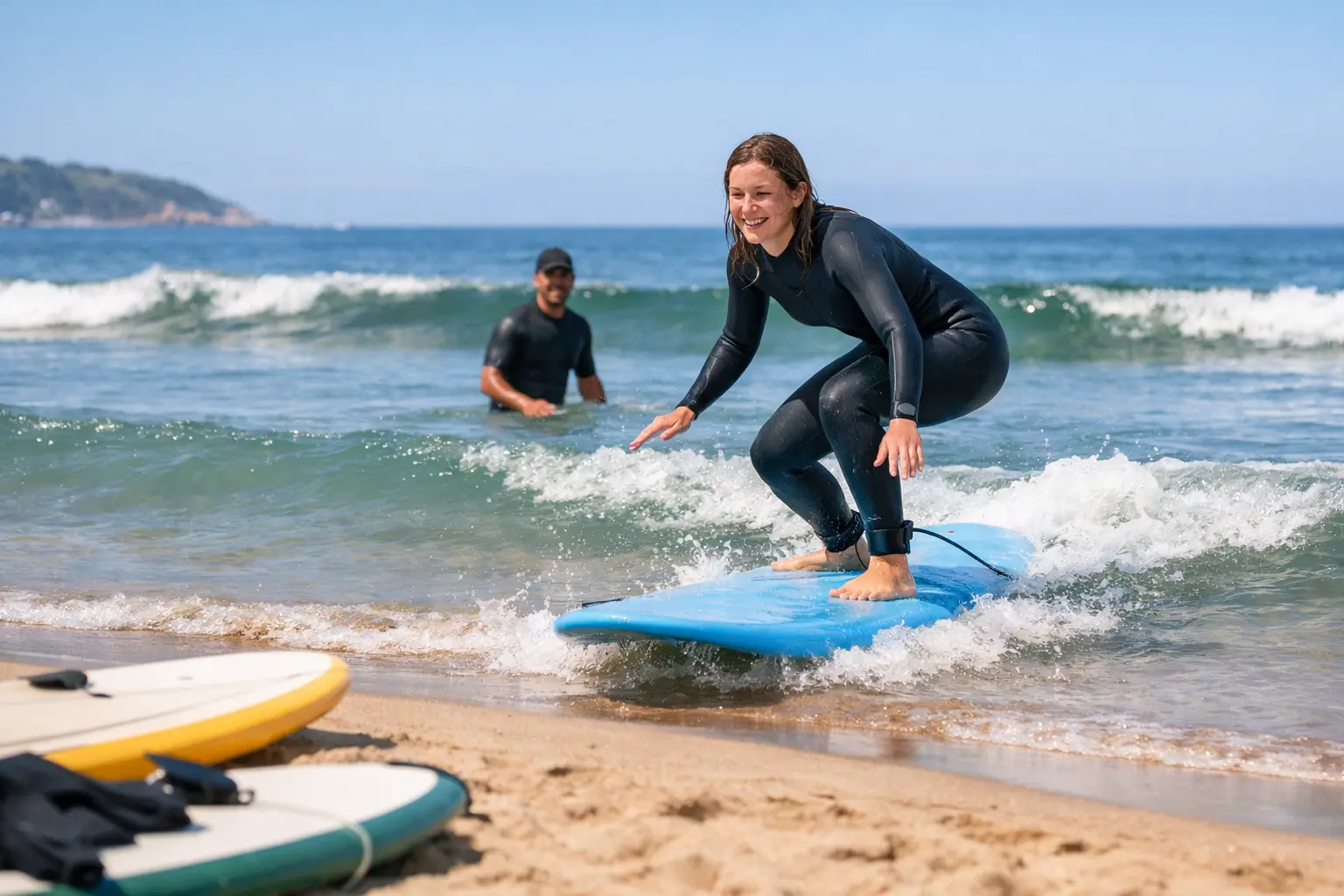
As a beginner, you should start in whitewater (broken waves), not unbroken green waves.
Step-by-step wave catching:
- Paddle toward shore
- Watch the wave approach behind you
- Paddle hard as it lifts your board
- Feel the push—then prepare to stand
Timing matters more than strength. When it clicks, you’ll feel the wave carry you forward effortlessly.
How to Stand Up on a Surfboard (The Pop-Up)
Standing up is where most beginners overthink things. Keep it simple.
The basic pop-up sequence:
- Hands flat beside your chest
- Push your upper body up
- Bring your feet underneath you
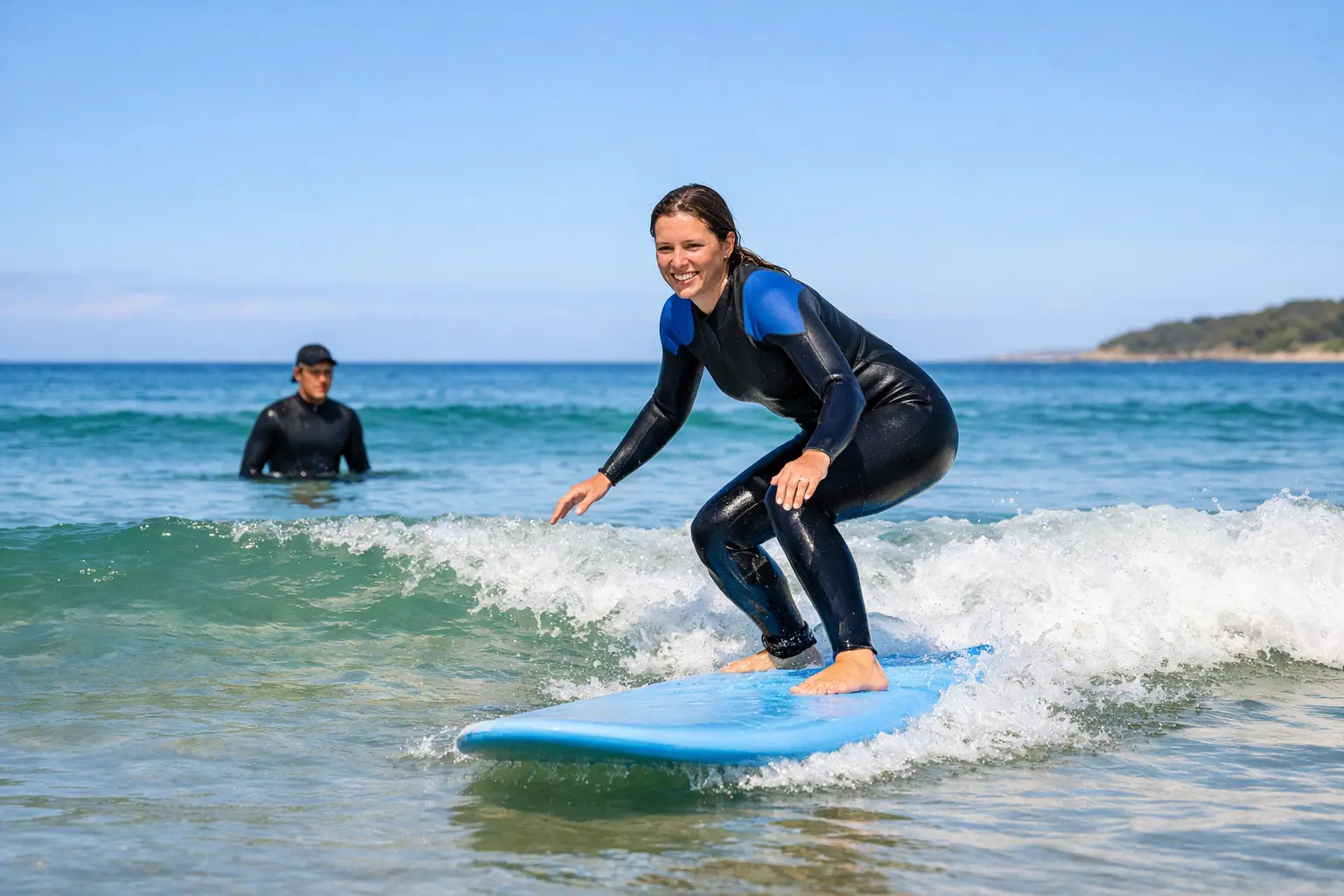
- Land in a low, balanced stance
Your knees should be bent, your weight centered, and your eyes looking ahead—not at your feet.
Practice this movement on land. Muscle memory makes a huge difference in the water.
Finding Your Surfing Stance
You’ll naturally fall into one of two stances:
- Regular stance: left foot forward
- Goofy stance: right foot forward
There’s no right or wrong. Use whichever feels stable.
Beginner stance tips:
- Feet shoulder-width apart
- Knees bent
- Arms relaxed for balance
Surf Equipment Guide for Beginners
Choosing the right gear can make or break your early experience.
Best Surfboard for Beginners
You want stability, float, and forgiveness—not speed or style.
| Board Type | Length | Why It Works for Beginners |
|---|---|---|
| Soft-top surfboard | 8–9 ft | Stable, safe, easy to paddle |
| Foam longboard | 7–8 ft | Good balance and wave-catching |
| Mini-mal | 7–8 ft | Smooth transition board |
Avoid shortboards. They look cool but make learning harder than it needs to be.
What Size Surfboard Should a Beginner Use?
Board size depends more on volume than height.
General rule:
- Heavier surfers need more volume
- Beginners should always choose more float, not less
If you’re unsure, go bigger. Extra stability builds confidence.
Wetsuits and Essential Surf Gear
Beyond the board, a few items are non-negotiable.
Beginner surf essentials:
- Wetsuit suited to water temperature
- Surf leash (always)
- Soft surf wax
- Rash guard or UV protection
A properly fitting wetsuit keeps you warm and reduces fatigue, allowing longer sessions.
Surf Safety Tips Every Beginner Must Know
Learning how to surf for beginners safely is just as important as learning technique.
Understanding Ocean Conditions
Before entering the water, always observe:
- Wave size and consistency
- Wind direction
- Currents and channels
If conditions look chaotic or powerful, wait. There’s no shame in choosing another day.
Rip Currents Explained Simply
Rip currents are narrow channels of water moving away from shore.
If caught in one:
- Stay calm
- Don’t fight it
- Float or swim parallel to shore
Knowing this alone can save your life.
Beginner Surf Etiquette (Critical Knowledge)
Surfing has unspoken rules that keep everyone safe.
Basic etiquette every beginner should follow:
- Don’t drop in on someone else’s wave
- Hold onto your board
- Respect the lineup
- Apologize if you make a mistake
Good etiquette earns respect faster than skill.
Common Beginner Surfing Mistakes
Avoid these early pitfalls:
- Standing too early
- Looking down
- Using waves that are too big
- Skipping warm-ups
Mistakes are normal—but awareness helps you correct them faster.
How to Practice Surfing Faster as a Beginner
Progress doesn’t only happen in the ocean.
Dry-Land Training That Actually Helps
You can improve even when you’re not surfing.
Effective off-water practice:
- Pop-up repetitions
- Core stability exercises
- Swimming for paddle endurance
Even 10 minutes a day adds up.
Should Beginners Take Surf Lessons?
Lessons can accelerate learning dramatically.
| Learning Method | Advantages | Drawbacks |
|---|---|---|
| Surf lessons | Faster progress, safety | Cost |
| Self-learning | Flexible, affordable | Slower improvement |
If you can afford a lesson early on, it’s often worth it.
How Long Does It Take to Learn How to Surf for Beginners?
This depends on consistency, conditions, and mindset.
Typical beginner timeline:
- First session: standing briefly
- 5–10 sessions: standing regularly
- 3–6 months: basic turning and control
Progress isn’t linear. Some days feel amazing. Others feel frustrating. That’s normal.
Conclusion:
Learning how to surf for beginners isn’t about instant success. It’s about showing up, respecting the ocean, and allowing yourself to learn at your own pace. Every wipeout teaches you something. Every wave builds confidence.
FAQ : How to Surf for Beginners
How to surf for beginners step by step?
Start with a soft-top board, practice paddling, catch whitewater waves, and focus on standing safely before moving to green waves.
Is surfing dangerous for beginners?
Surfing carries risks, but proper equipment, safe conditions, and awareness significantly reduce them.
Can you learn how to surf for beginners without lessons?
Yes, but lessons often speed up progress and improve safety.
How often should beginners surf to improve?
Two to three sessions per week is ideal for steady improvement.
What waves are best when learning how to surf for beginners?
Small, gentle waves at sandy-bottom beaches are ideal.