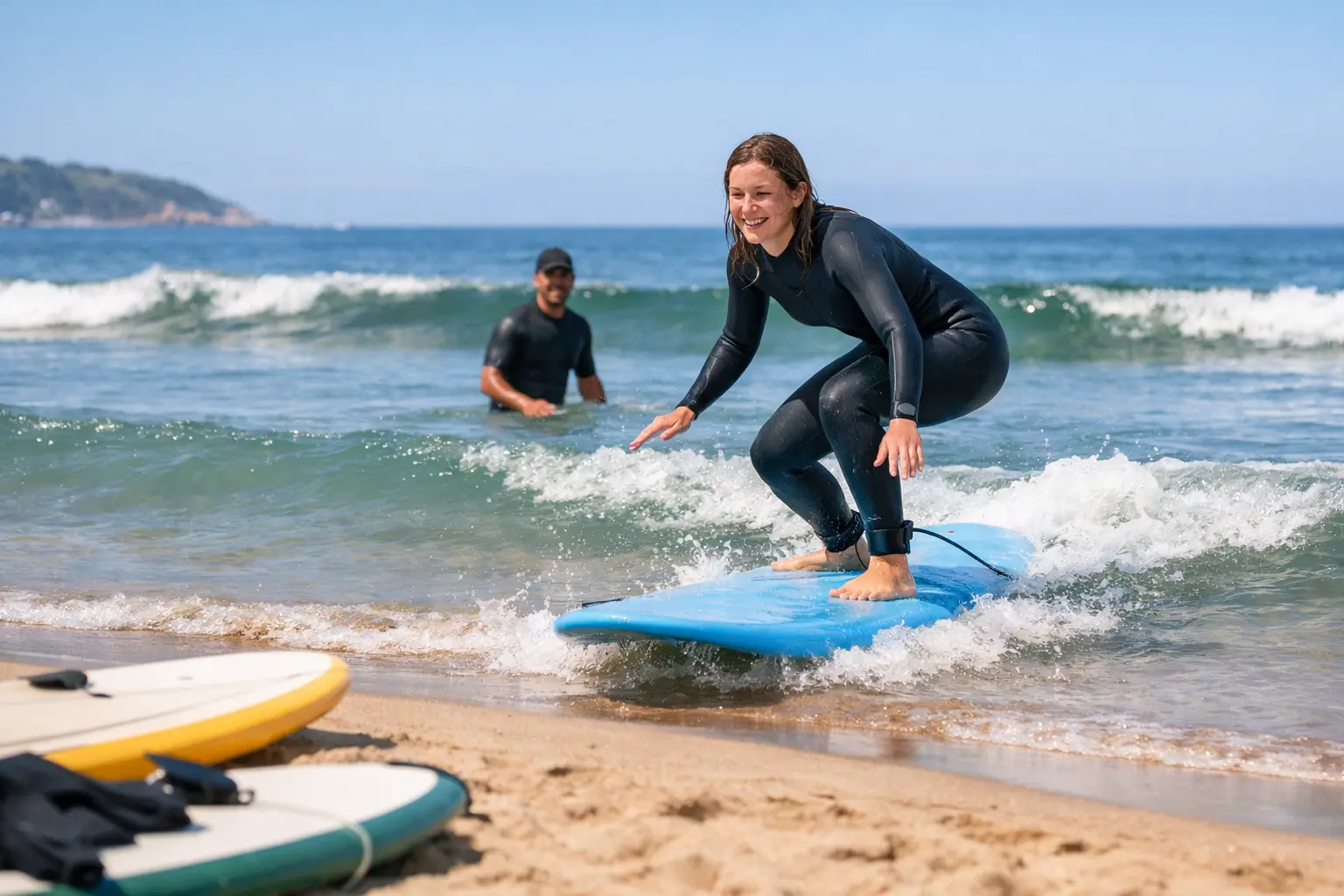

You’re lying on your board, heart pounding, arms burning from paddling. A wave starts to lift you, and for a split second, everything feels uncertain. This is the moment every beginner both dreams of and fears. Learning how to stand up on a surfboard isn’t just a technical step—it’s an emotional milestone. It’s the difference between feeling like a passenger and feeling like a surfer.
If you’ve tried before and wiped out, you’re not alone. If you’re nervous about trying for the first time, that’s completely normal. Standing up on a surfboard is challenging because it demands timing, balance, and confidence all at once. The good news? These skills can be learned by anyone—yes, including you.
This guide is designed to walk you through the process in a clear, practical way. No jargon. No shortcuts that don’t work. Just a step-by-step approach that helps you understand how to stand up on a surfboard safely, smoothly, and with confidence.
Table of Contents
Why Standing Up on a Surfboard Feels So Hard at First
Before you dive into technique, it helps to understand why this part of surfing feels so difficult in the beginning. When you know what’s working against you, frustration turns into progress.
Standing up on a surfboard challenges you because:
- You’re balancing on a moving surface
- Your body is in an unfamiliar position
- Timing matters more than strength
- Fear often causes hesitation
Most beginners assume they’re failing because they’re unfit or uncoordinated. In reality, the issue is usually technique and timing, not ability.
Common Beginner Struggles
- Standing up too slowly
- Looking down instead of forward
- Feet landing in the wrong place
- Trying to stand before the wave carries you
Once you correct these issues, standing up becomes far more consistent.
Before You Try to Stand Up: Get the Basics Right
Choose the Right Surfboard for Beginners
Your surfboard plays a massive role in how easily you’ll learn how to stand up on a surfboard. Beginners need stability, not speed.
Best surfboard characteristics for beginners:
- Longer length (8–9 feet)
- Wide shape for balance
- High volume for flotation
- Soft-top construction for safety
Beginner Surfboard Comparison
| Board Type | Length | Stability | Beginner Friendly |
|---|---|---|---|
| Soft-top longboard | 8–9 ft | Very high | Excellent |
| Funboard | 7–8 ft | Moderate | Good |
| Shortboard | Under 7 ft | Low | Not recommended |
If you’re struggling to stand up, your board may simply be too small.
Find the Correct Body Position on the Surfboard
Before you ever stand, your position while lying down matters more than you think.
Correct paddling position:
- Chest lifted slightly
- Chin up, eyes forward
- Toes touching or close to the tail
- Board gliding smoothly without nose diving
If the nose sinks, you’re too far forward. If the board feels slow and unstable, you’re too far back.
How to Stand Up on a Surfboard: Step-by-Step
Now let’s break down the exact process. This is where most beginners either rush or overthink. Keep it simple.
Step 1: Paddle with Purpose and Commitment
You don’t stand up on the wave—you stand up because the wave is carrying you.
What to focus on:
- Paddle hard as the wave approaches
- Use long, steady strokes
- Feel the wave push the board forward
- Stay calm and committed
If you hesitate here, the wave will pass under you.
Step 2: Hand Placement Sets Everything Up
As the wave lifts you, place your hands flat on the board.
Correct hand placement:
- Hands under your shoulders
- Fingers spread for stability
- Elbows close to your body
Avoid grabbing the rails. This slows you down and throws off your balance.
Step 3: The Pop-Up (The Heart of Standing Up)
The pop-up is a single, fluid movement—not a slow climb.
Beginner-Friendly Pop-Up Breakdown
- Push your chest up like a push-up
- Shift your weight slightly forward
- Bring your front foot forward first
- Land both feet flat in one motion
Your goal is to move from lying down to standing without pausing on your knees.
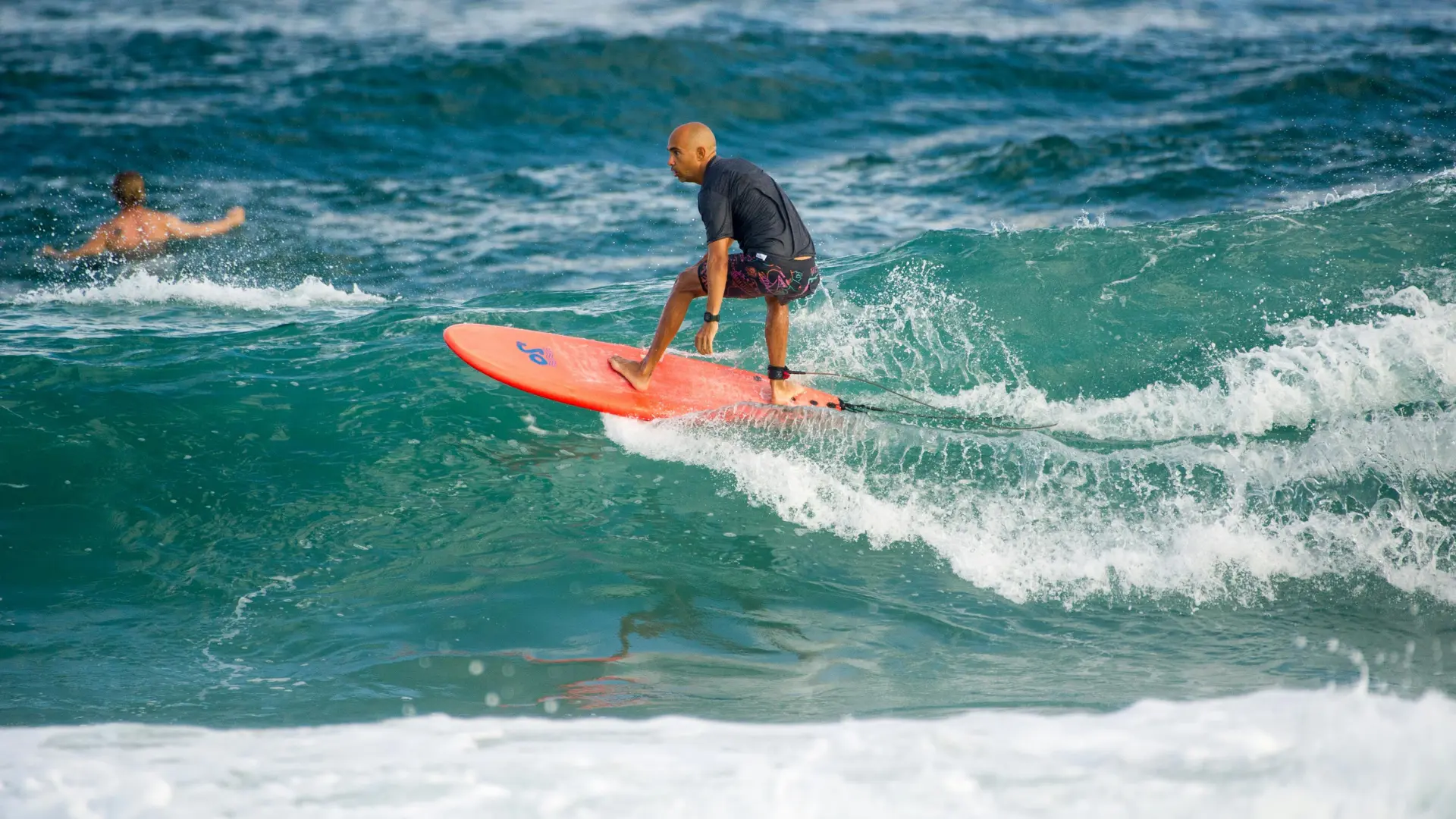
Step 4: Set Your Surfing Stance and Balance
Once you’re on your feet, balance is everything.
Proper beginner stance:
- Feet shoulder-width apart
- Knees bent, never locked
- Back straight but relaxed
- Eyes looking where you want to go
Regular vs Goofy Stance
| Stance | Front Foot |
|---|---|
| Regular | Left foot forward |
| Goofy | Right foot forward |
Not sure which one you are? Whichever foot you naturally step forward with usually becomes your front foot.
Common Mistakes When Learning How to Stand Up on a Surfboard
Mistakes are part of learning, but repeating the same ones slows progress. Here are the most common issues beginners face.
Standing Up Too Slowly
Surfing rewards commitment. A slow pop-up causes you to lose momentum and balance.
Looking Down at Your Feet
Your body follows your eyes. Looking down makes you fall forward.
Feet Too Close Together
A narrow stance reduces stability. Give yourself room to balance.
Straight Legs
Locked knees make you stiff and unstable. Bent knees absorb movement and help you stay upright.
Practice on Land: Improve Faster Without the Ocean
You don’t need waves to practice how to stand up on a surfboard. In fact, land drills can speed up your progress dramatically.
At-Home Pop-Up Drills
- Practice pop-ups on a yoga mat
- Use slow motion to perfect form
- Repeat 10–20 times daily
Balance and Strength Exercises
- Squats for leg strength
- Planks for core stability
- Push-ups for upper body power
Even five minutes a day makes a difference.
Best Surf Conditions for Practicing Standing Up
Choosing the right conditions can turn a frustrating session into a breakthrough.
Ideal Beginner Surf Conditions
| Condition | Best Range |
|---|---|
| Wave size | 1–3 feet |
| Wind | Light or offshore |
| Break type | Sandy beach break |
| Crowd | Minimal |
Small, clean waves give you more time to stand and adjust.
How Long Does It Take to Learn How to Stand Up on a Surfboard?
This is one of the most common questions beginners ask.
The honest answer: it depends.
Factors That Affect Progress
- How often you practice
- Your fitness level
- Board choice
- Surf conditions
- Patience and mindset
Some beginners stand up on day one. Others take several sessions. Both outcomes are normal.
What matters most is consistency, not speed.
Conclusion:
Learning how to stand up on a surfboard is one of the most rewarding moments in surfing. It’s not just about technique—it’s about persistence, patience, and trusting yourself. Every fall teaches you something. Every attempt builds confidence.
Remember, no one looks graceful on their first wave. What matters is that you keep showing up, keep practicing, and keep enjoying the process.
FAQ : How to Stand Up on a Surfboard
How do beginners stand up on a surfboard for the first time?
You paddle into a small wave, place your hands under your shoulders, and pop up in one smooth motion while keeping your eyes forward.
Why do I keep falling when I try to stand up on a surfboard?
Most falls come from poor timing, looking down, or standing too slowly. Fixing these usually leads to quick improvement.
Is it easier to stand up on a longboard?
Yes. Longboards are wider, more stable, and more forgiving, making them ideal for learning.
Can you learn how to stand up on a surfboard without lessons?
Absolutely. Lessons help, but many surfers learn through practice, observation, and patience.
How often should you practice standing up on a surfboard?
Aim for at least one to two surf sessions per week, plus land practice if possible.