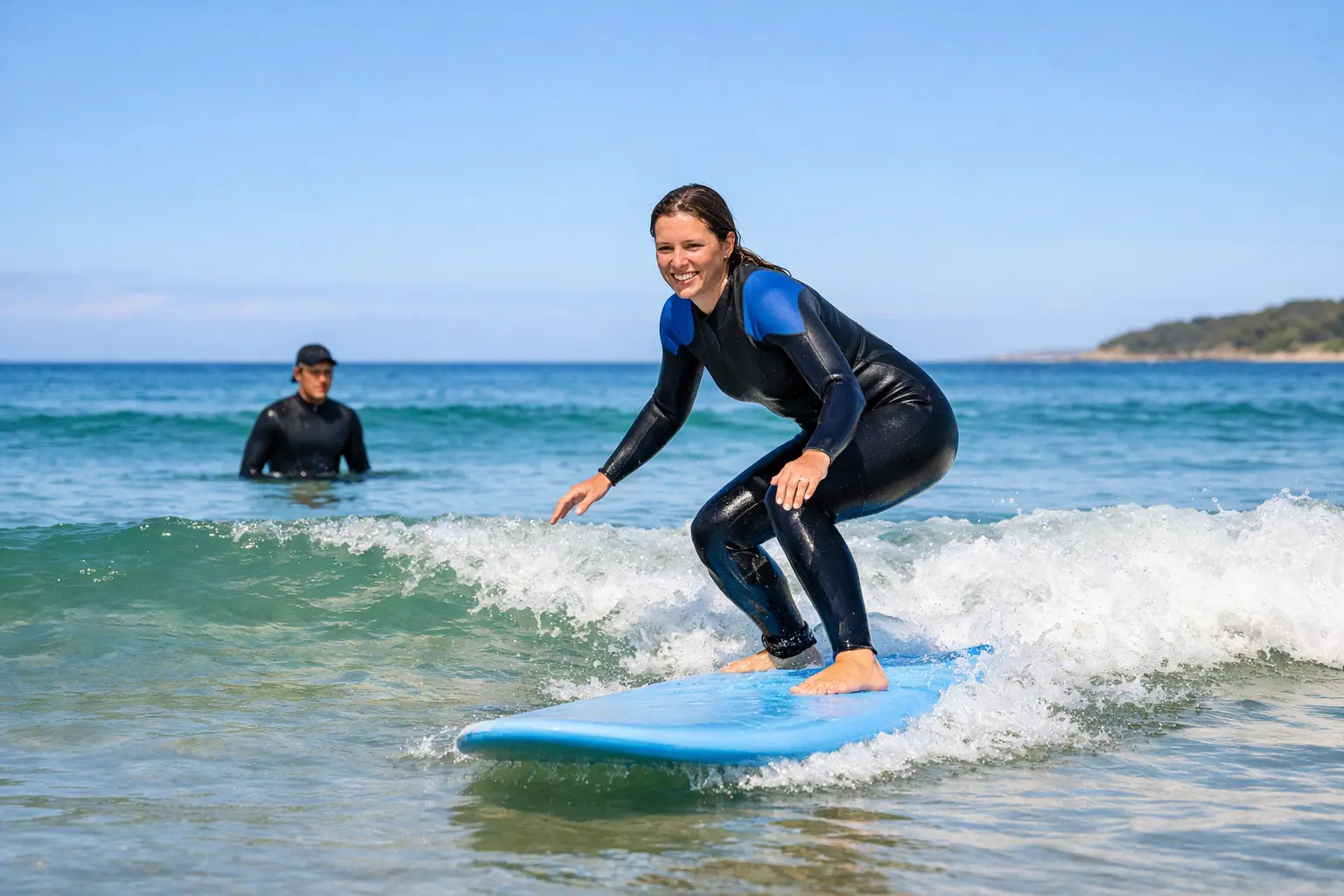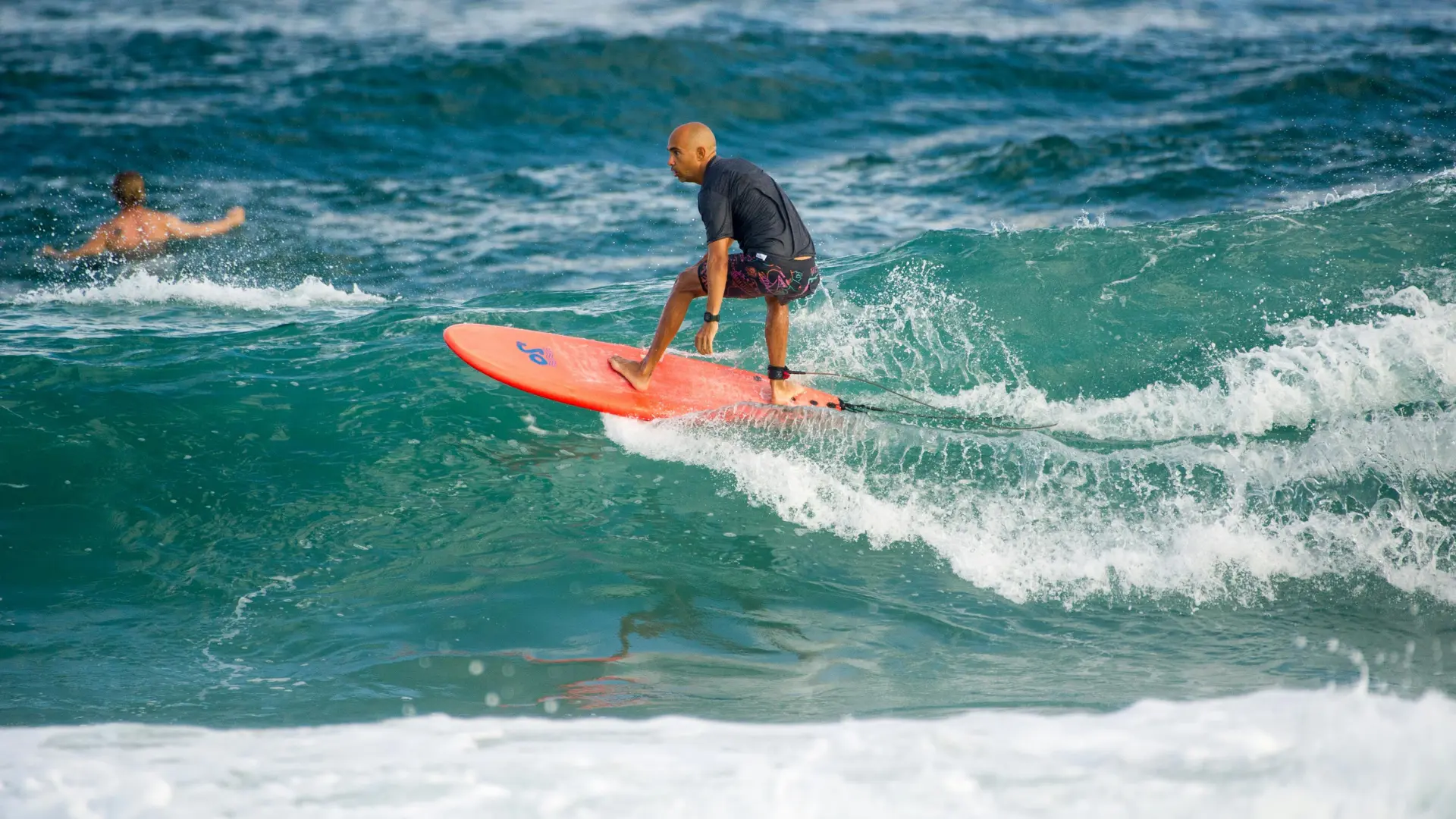

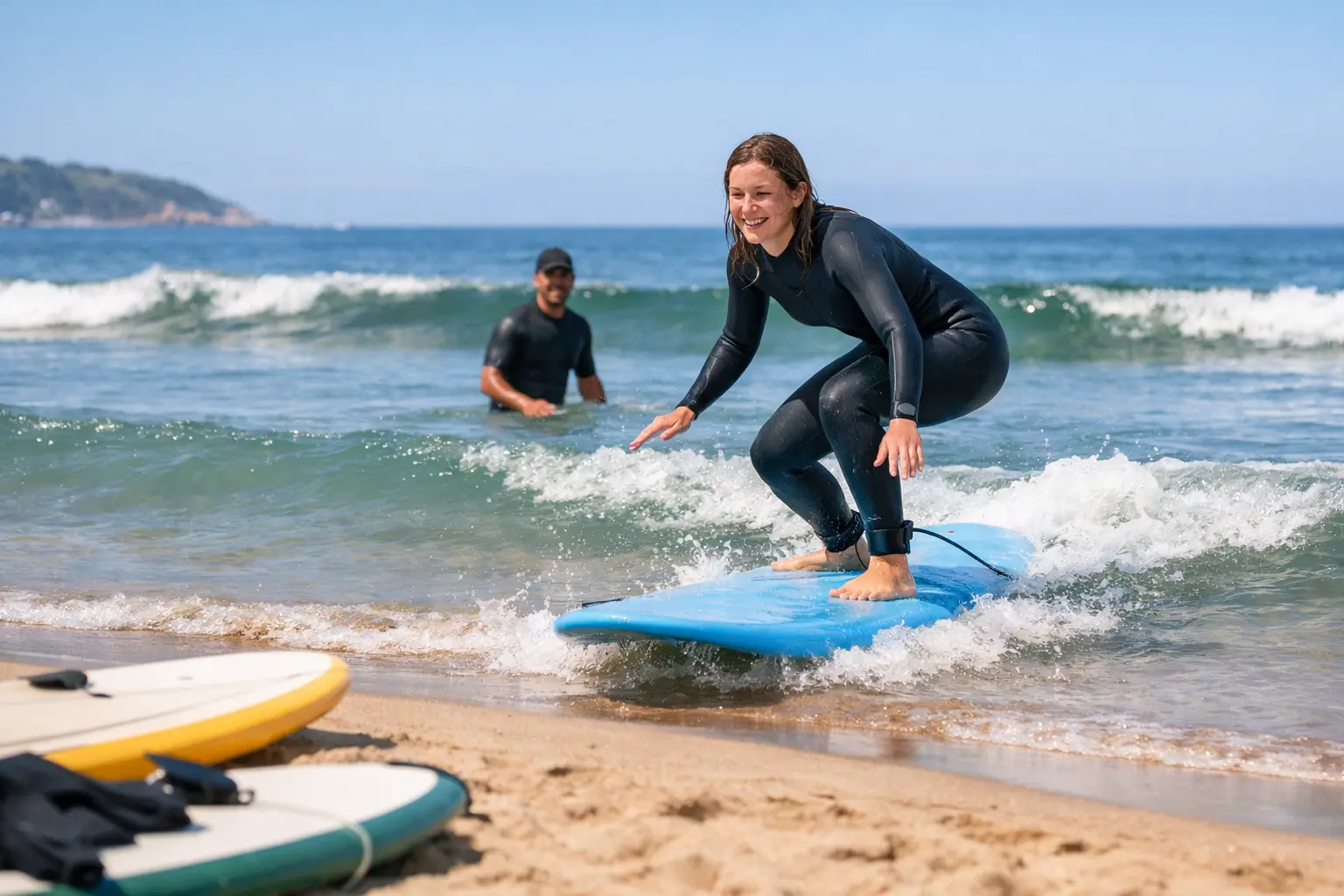
If you’ve ever stood on a beach watching surfers glide across the water, you’ve probably felt two things at once: excitement and hesitation. The ocean looks powerful. The surfers look confident. And you might wonder whether surfing is really something you can do.
Here’s the truth: surfing for beginners is not about strength, fearlessness, or looking cool. It’s about learning to read the ocean, staying patient, and giving yourself permission to fall, laugh, and try again. Every surfer you admire once struggled to balance, missed waves, and wiped out in shallow water.
This guide is written for you—the beginner who wants clear steps, honest expectations, and practical advice. By the end, you’ll understand how surfing works, what equipment you need, how to stay safe, and exactly how to catch your first wave with confidence.

Table of Contents
What Is Surfing? A Beginner-Friendly Explanation
Understanding Surfing in Simple Terms
Surfing is the act of riding ocean waves on a surfboard by paddling into them and standing up as the wave carries you toward shore. That’s it. No tricks, no jumps, no fancy moves required—especially when you’re starting out.
For beginners, surfing focuses on:
- Balance rather than speed
- Small, gentle waves instead of powerful ones
- Control and safety instead of style
You’re not trying to impress anyone. You’re learning how your body, your board, and the ocean work together.
Why Surfing Is Suitable for Beginners of All Ages
One of the biggest myths about surfing is that it’s only for young, athletic people. In reality:
- Children learn quickly because they aren’t afraid to fall
- Adults progress steadily because they follow instructions
- Older beginners often surf longer sessions due to patience and focus
If you can swim and are willing to learn, you can surf.
Why Surfing for Beginners Is Easier Than You Think
Breaking Common Beginner Myths
Let’s clear up a few misunderstandings that stop many people from starting:
- “You need to be extremely fit.”
Surfing builds fitness over time. You don’t need it beforehand. - “You must live near the ocean.”
Many beginners learn during short surf trips or vacations. - “Surfing is too dangerous.”
When done in beginner conditions with basic safety rules, surfing is very manageable.
What You Should Actually Expect as a Beginner
When you first start surfing, progress usually looks like this:
- You learn how to paddle correctly
- You fall off the board many times
- You catch whitewater waves
- You stand up briefly
- One day, everything clicks
That “click” moment—your first real ride—is why people fall in love with surfing.
Essential Surfing Gear for Beginners
Choosing the Right Surfboard for Beginners
Your surfboard choice matters more than anything else. A beginner-friendly board makes learning smoother and safer.
Best beginner surfboard features:
- Long length (8–9 feet)
- Wide shape for balance
- Soft top to reduce injury risk
- High volume for stability
Avoid shortboards early on. They look exciting, but they make learning harder.
Beginner Surf Gear Checklist
You don’t need much to start. Keep it simple.
- Soft-top surfboard
- Leash (attached to your ankle)
- Surf wax
- Wetsuit (depending on water temperature)
- Rash guard or UV shirt
Beginner Surf Gear Table
| Item | Purpose | Beginner Recommendation |
|---|---|---|
| Surfboard | Stability & float | 8–9 ft soft-top |
| Leash | Safety | Board-length leash |
| Wax | Grip | Warm or cold water wax |
| Wetsuit | Warmth | Based on local conditions |
Best Surf Spots for Beginners
How to Choose a Beginner-Friendly Beach
Not all beaches are suitable for beginners. You want:
- Sandy bottoms (not rocks or reefs)
- Slow, rolling waves
- No strong currents
- Plenty of space
Surf schools usually choose safe beaches for a reason—learn from their example.
Ideal Wave Conditions for Beginners
For surfing beginners, the best waves are:
- 1 to 3 feet high
- Soft, breaking slowly
- Consistent rather than powerful
Calm mornings with light wind are usually ideal.
Surf Safety Rules Every Beginner Must Know
Understanding Ocean Safety
Before you ever stand up on a board, you need to understand the ocean.
Key safety concepts:
- Rip currents: Learn how to spot and escape them
- Wave patterns: Observe before entering the water
- Your limits: If you feel tired, take a break
Surf Etiquette for Beginners
Surfing has unwritten rules that keep everyone safe.
Basic etiquette:
- Don’t drop in on another surfer’s wave
- Paddle around waves, not through riders
- Hold onto your board when falling
Beginner Surf Safety Checklist
- Wear your leash at all times
- Never surf alone as a beginner
- Check weather and wave reports
- Respect lifeguard warnings
Step-by-Step Guide to Catching Your First Wave
This is the heart of surfing for beginners.
Step 1: Lying on the Board Correctly
Position matters more than strength.
- Chest centered on the board
- Nose slightly above water
- Feet relaxed and together
If the nose sinks, move back. If it lifts too much, move forward.
Step 2: Paddling Efficiently
Paddling is how you reach waves.
- Use long, deep arm strokes
- Keep your head up
- Paddle smoothly, not frantically
Strong technique beats brute force every time.
Step 3: Choosing the Right Wave
As a beginner:
- Start with whitewater waves
- Face the beach
- Paddle early
Let the wave carry you.
Step 4: The Pop-Up Technique
The pop-up is how you stand.
- Hands under chest
- Push up quickly
- Bring feet under your body
- Bend knees and stay low
Practice this movement on land—it helps more than you think.
Step 5: Riding the Wave
Once standing:
- Look forward, not down
- Keep knees bent
- Stay relaxed
Balance improves naturally with repetition.
Beginner Surfing Steps Table
| Step | Focus | Tip |
|---|---|---|
| Paddle | Timing | Start early |
| Pop-up | Speed | One smooth motion |
| Ride | Balance | Stay loose |
Common Mistakes in Surfing for Beginners
Mistakes Almost Every Beginner Makes
- Standing too late
- Looking down at feet
- Using the wrong board
- Skipping warm-ups
These mistakes are normal. Awareness fixes them quickly.
How to Improve Faster
- Practice pop-ups daily
- Watch experienced surfers
- Take short, frequent sessions
- Rest when tired
Progress in surfing comes from consistency, not intensity.
Surfing Lessons vs Learning on Your Own
Why Lessons Help Beginners
Surf lessons provide:
- Immediate feedback
- Safer conditions
- Faster improvement
Even one lesson can save weeks of frustration.
Learning Without Lessons
If you choose to self-learn:
- Start in whitewater
- Use beginner boards
- Go with experienced friends
Both paths work—it depends on your learning style.
Physical and Mental Benefits of Surfing for Beginners
Physical Benefits
Surfing improves:
- Core strength
- Balance and coordination
- Cardiovascular fitness
- Flexibility
It’s a full-body workout disguised as fun.
Mental Benefits
Many beginners are surprised by how surfing affects the mind:
- Stress levels drop
- Focus improves
- Confidence grows
The ocean demands presence. That’s powerful.
Conclusion:
Surfing for beginners is not about conquering the ocean. It’s about learning to move with it. Some days will feel frustrating. Others will feel unforgettable. Both are part of the journey.
Your first wave may last only seconds, but the feeling stays with you. That moment—standing, balanced, moving with the water—is when surfing becomes more than a sport.
FAQ : About Surfing for Beginners
Is surfing hard for beginners?
Surfing is challenging, but not impossible. With the right board and conditions, most beginners stand up within their first sessions.
How long does it take to learn surfing as a beginner?
Most beginners catch their first wave in 1–3 days. Comfort and consistency take weeks or months.
Is surfing safe for beginners?
Yes, when you choose beginner-friendly beaches, wear a leash, and follow safety rules.
What is the best age to start surfing?
There is no “best” age. Beginners range from kids to retirees.
Do beginners need to be strong swimmers?
You should be comfortable in water, but elite swimming skills are not required.